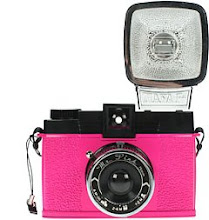
Peoples! It's Lord Hood's birthday!
:nypl (click on image for enlargement and edification)
12.12.2008
12.11.2008
eleven.


Letterpress goodness from Sycamore Street Press.
Eva at Sycamore Street Press says that all of the her holiday cards are available at the Ohio-based press's etsy shop - priced at $3/card. And the 2009 calendar is also available; 50% of Sycamore Street's profits from the calendar goes to AHOPE, an orphanage in Addis Ababa, Ethiopia, for children who are HIV+.


:sycamore street press etsy shop and website
12.10.2008
ten.


Charming matryoshki. Sketch and execution by the marvelous talent, Irina Troitskaya.
The Russian matryoshka (матрёшка or матрешка) nesting doll dates from 1890 and is said to have been inspired by souvenir dolls from Japan. But the concept of nested objects was already familiar in Russia, having been applied to carved wooden apples and Easter eggs; the first Fabergé egg, manufactured in 1885, had a nesting of egg, yolk, hen and chick.
The story goes that Sergei Maliutin (a painter from a folk crafts workshop in the Abramtsevo estate of famed Russian industrialist Savva Mamontov) was inspired by a set of Japanese wooden dolls representing Shichi-fuku-jin, the Seven Gods of Fortune. Maliutin drew a sketch of a Russian version of the toy. It was carved by Vasiliy Zvezdochkin and painted by Sergei Maliutin at the Children’s Education Workshop/Salon in Abramtsevo. It consisted of eight dolls: the outermost was a girl holding a rooster, six inner dolls were girls, the fifth doll was a boy, the innermost, a baby:
In 1900, M.A. Mamontova, the wife of Savva Mamontov, presented the dolls at the World Exhibition in Paris; the toy earned a bronze medal. Soon, matryoshki were being produced throughout Russia.
Apparently, the idea took hold.
:irina troitskaya
12.09.2008

12.08.2008
eight.

Four pairs of (festively-colored) chairs.

 :(from top) 19th century italian rococo side chairs; 1940s open arm chairs by paolo buffa, italy; 1950s shell chairs - leg base designed by charles & ray eames, edited by herman miller, usa; 1960s lounge chairs by milo baughman, usa.
12.07.2008
seven.

Surreal holiday windows at 57th and 5th.
Recession? Depression? Bah, humbug!


 I'm loving this little guy.
:d:m; dan cross; bergdorf goodman
listening to you

See me. Feel me. Touch me. Heal me. The Who's surviving band members, Roger Daltrey and Pete Townshend, were recipients of the Kennedy Center Honors last evening, along with Morgan Freeman, Barbra Streisand, George Jones and Twyla Tharp. The honors recognize individuals who have had an impact on American culture through the performing arts, part of the living memorial to President John F. Kennedy.
The Who formed in 1964. The primary lineup consisted of guitarist Pete Townshend, vocalist Roger Daltrey, bassist John Entwistle and drummer Keith Moon. The band first hit the top ten in the USA in 1967 with "I Can See for Miles." The 1969 release of Tommy was the first in a series of top five albums for the group in the USA.
Keith Moon died in 1978, after which the band released two more studio albums with drummer Kenney Jones, before officially disbanding in 1983. They re-formed on several occasions to perform at special events such as Live Aid and for some reunion tours. In 2000, the three surviving original members began to discuss the possibility of recording an album of new material. These plans were delayed following the death of John Entwistle in 2002. But Pete Townshend and Roger Daltrey continued to perform as The Who. In 2006 they released the studio album Endless Wire, which reached the top ten in the UK and US.
"See Me, Feel Me - Listening to You" is the last song from the film, Tommy, which stars Roger Daltrey in the title role. The message of unification and hope in this song was inspired by Meher Baba, a guru Pete Townshend was following. Townshend wrote Tommy in an attempt to bring people together through rock music. The Who played all of Tommy at Woodstock, performing this song just as the sun was rising on the third morning of the festival in 1969. That image from Woodstock helped launch Roger Daltrey's career as well as The Who's success in America.
I experienced The Who during their 1976 tour (it was memorable, believe me); the concert prominently featured entire sets from Tommy. And may I just say: a 32-year-old, shirtless Roger Daltrey strutting about the stage all satyr-like = yum ee ness. Now, for your listening and viewing pleasure:
:youtube; nytimes; white fang
12.06.2008
six.

Red ribbon beauties.
In America, gift wrapping is generally thought of as a functional or decorative act. But in many other countries, gift wrapping is an art with important symbolic significance. In Japan, for example, presentational elements such as wrapping color, number of layers, wrapping material and wrapping accessories all convey a message.
In Japan, the traditional art of gift wrapping is known as tsutsumi, from a word meaning “discreet.” In China, a red envelope containing money is often given along with gifts. This is sometimes known as yāsuì qián, meaning “pressed money.”
In the Western world, the history of gift wrapping can be traced to the use of colored wallpaper in 16th century England. Christmas papers originated in 19th century England as a supplement to Christmas letters and cards. Boxes, bags and gift wrap featured seasonal images such as angels and holly.
Early gift wrap in the U.S. was much more utilitarian. Plain brown paper and string were often used in the early 20th century. Printed gift wrap was available, and green, red and white tissue paper was commonly used for Christmas gifts. But it was actually a shortage of tissue paper that prompted the Hall brothers, founders of Hallmark, to substitute decorative envelope liners, an innovation that soon led to the widespread use of patterned wrapping paper.
:the contemporist, red ribbon project; kyrion flickr, cartier building; pkitty cat flickr; diana:muse, ny public library holiday wrap; ashley goldberg, masquerade; the cherry blossom girl.

Good weekend, everyone. Wherever you may be going.
:flickr via lolita
12.05.2008
five.

Ho ho ho.
Ho.
Ho.
:accessorizing one's st. nick experience with gossamer wings and cowgirl boots is very special. i shot this pic last december. as i recall, the location was around 5th ave. and 50-something street.
12.04.2008


12.03.2008
three.

Alvin, Theodore, Simon. The Chipmunks first officially appeared on the scene in a novelty record released in late fall 1958 by Ross Bagdasarian, Sr. (aka David Seville, the trio's manager, human father and confidant). The song, originally listed on the record label as "The Chipmunk Song (Christmas Don't Be Late)," featured the singing skills of the chipmunk trio. One phrase in the chorus has Alvin wishing for a hula hoop, which was that year's hot new toy.
The novelty record was highly successful, selling more than four million copies in seven weeks, and it launched the careers of its chipmunk stars. It spent four weeks at number one on the Billboard Hot 100 chart from December 22, 1958 to January 12, 1959. It also earned three Grammy Awards and a nomination for Record of the Year. At the height of the record's popularity, Bagdasarian and three chipmunk hand-puppets appeared on The Ed Sullivan Show, lip-synching the song. "The Chipmunk Song" appeared on the Chipmunks' debut album, Let's All Sing with the Chipmunks, in 1959, and was repeated on Christmas with the Chipmunks, released in 1962. The song has also been included on several compilation albums.
:wiki; youtube
12.02.2008
two.

Many of Tom Chambers's photo compositions explore a place where two or more unexpected circumstances collide. In Night Light, that collision results in an ironic mix of a Chambers trademark middle-of-nowhere setting with the strikingly luminous gold hue of a tattered, ill-fitting prom gown.
:wall space gallery; © copyright tom chambers
abbey ryan: born to paint (part II)

Philadelphia-based artist Abbey Ryan famously paints, posts and lists an oil painting on eBay each weekday; she is now well into the second year of her aptly named Painting a Day Project.
In late September, I had the great pleasure of posting an interview with Abbey in which she discussed her development as an artist and her motivations for starting and continuing the Project. In this second interview post, Abbey discusses the biggest influences on her art
and her life.
Which artists do you admire most? Why?
I have diverse interests, but usually I admire artists who follow a focused path. Having recently visited Italy, Giorgio Morandi stands out in my mind right now. Some of my other current interests are Fantin-Latour, Velasquez, Morris Louis, Anish Kapoor and Johannes Girardoni.
What is the most recent exhibition/show you saw? What did you think of it?
The Morandi Museum may not be the most recent exhibit I've seen, but it was a hugely important experience for me. I learned an incredible amount seeing so much of his work in person. I had seen the grouping of Morandi’s paintings from the 50s and early 60s at Lucas Schoormans in 2004, but never this much all at once. The Museum also has an amazing reconstruction of Morandi’s studio/room, which contains his actual things. (On another note—especially for your NY area readers—the Met is currently exhibiting a huge exhibition of Morandi’s work—the first retrospective in the United States. Exhibition on view through December 14.)
Who and what are the most important influences on your painting?
Specifically, my mom (she’s also a painter) has been the biggest influence on my painting work. I feel lucky to have inherited her hands and her ability to see. I also think that the time I spent living and working at a trade school and marine science lab in Pohnpei, Micronesia (in the North Pacific) has greatly impacted my color and spatial sensibilities. In general, my work explores the synergy that leads to a visual experience— how the mind directs the eye in the process of seeing. In that way, my paintings avoid specific recognizable references. I’m talking here about my personal work, not my daily paintings. The daily paintings, on the other hand, are prompted by things that catch my eye—whatever fruit or food or objects are around my house. Since my time in Italy, I’ve felt a shift in my daily painting practice, and several people have written or commented to me about this—but I think it’s too soon to really put my finger on it.

What type of art do you have in your home?
I have a lot of ceramic and wood sculptures, handmade Micronesian crafts, a few of my own paintings, several of my Mom’s paintings, and I’ve started to slowly collect art. At this point, the paintings that I buy or trade with other artists vary a great deal. One of my favorite pieces of art is a small painting I have by another teacher I had a Hunter, Gabriele Evertz. It’s a phenomenal piece, definitely one that talks to me all the time.
What do you value most in life?
Family. 
If you could invite six guests (living or dead, real or fictional) to a dinner party, who would they be?
Thomas Merton, Theilard de Chardin, Frida Kahlo, Patty Griffin, Bob Dylan, Bob Marley, Artemisia Gentileschi. (I know, that’s seven.)

:abbey ryan studio; purchase abbey's paintings through her ebay listing—as of this morning, the beautiful mango and gorgeous pomegranate (images above) were still available.
Subscribe to:
Posts (Atom)